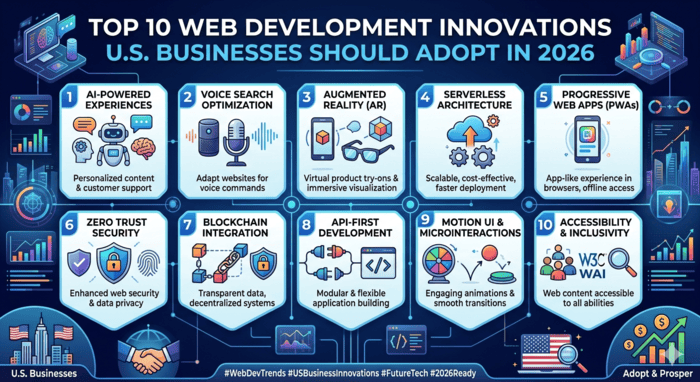
Top 10 Web Development Innovations U.S. Businesses Should Adopt in 2026
1. AI-powered customized at scale
Most people now expect websites to know what they like. Because of artificial intelligence, businesses can show products that actually fit each visitor. Content shifts on its own, depending on who is looking. Journeys through a site feel less random, more tuned in. Happy users stick around longer. When things make sense right away, buying happens easier. Loyalty grows without pushing it
Most people won’t stick around on vague sites these days. Websites must match what each visitor actually looks for instead. Thanks to new tools, businesses can shift what they show based on when someone visits, where they are, even past clicks or buys - making every page feel more personal without extra effort
Start by protecting personal information if you build AI tools in America. When tighter laws arrive, winning relies on clean data collected directly - paired with clever code. Outcomes improve when systems listen before they act
2. Fast Speed With Core Web Vitals 2.0
Speed remains high on Google’s list for 2026. This updated version of Core Web Vitals leans harder into how real users experience sites. Firms that build with tools such as Next.js 15, Remix, or Astro often load faster - then watch their conversion numbers climb. Though outcomes depend on execution, the trend holds across industries
Most people in America expect fast pages, particularly when using phones. Should a site take longer than two seconds to load, visitors head elsewhere instead. Speed matters more now because patience has shrunk across screens. Waiting feels pointless once clocks tick past that mark. Other sites are always ready, pulling users away without warning
3. Headless Commerce With Modular Design
Now it happens - companies across the U.S. begin shifting how they handle frontends. Instead of old setups, many now choose headless CMS paths. Flexibility shows up fast, speed gets better, linking tools feels smoother too. Each step opens wider reach through different selling spots
Mid-Size US Merchants Shift Toward Hydrogen Shopify BigCommerce And Custom Headless Platforms
4. Elegant Motion in UI with Subtle Interactions
Back when static sites ruled the web, they caught eyes just fine. These days? Not so much. Lately, subtle motion - like tiny animated cues or playful scroll tricks - shapes how people feel about a site. They guide visitors without shouting, respond quietly when clicked, make paths clearer. Movement isn’t there to show off; it works behind the scenes. A smooth journey matters more than flashy details ever did
5. Voice Search and Talking Interfaces
One reason stands out: so many homes across America now use smart devices. With that shift, tuning sites for voice makes sense - especially when people talk instead of type. Picture folks asking questions aloud; web creators might build pages that answer just like a person would. Expect to see more spoken queries handled smoothly online, along with help boxes and talking bots keeping pace
6. Dark Mode Defaults Built for Accessibility
These days, getting access matters more than ever. Come 2026, U.S. businesses must meet strict rules based on WCAG guidelines. Sites that stand out won’t just work well - they’ll blend smooth looks with tools like auto dark mode, better contrast, and support for screen readers
7. Server Rendering with Edge Processing
Out here, people expect answers fast. Thanks to sharper tools like edge computing, web pages now load crazy quick across the U.S., shaped by smarter ways servers work behind the scenes
Out here, businesses reaching folks in the Midwest plus those big city hubs on each coast face a real challenge - what people want online shifts fast from place to place. That kind of change keeps teams on their toes
Some businesses now think about their site's environmental effect right away. When they boost speed, ditch unnecessary data sharing, fewer emissions follow. Better digital setups mean leaner sites that load fast, help the planet too
For younger shoppers, knowing a company cares about the planet matters a lot. Cleaner software, greener servers, fewer digital transfers - these cut emissions quietly. Standing apart might come down to choices like these, maybe
Right now, safety must shape the blueprint. As dangers rise - on top of shifting legal demands - it can’t wait till later stages. Checks happen more often these days, while clear guidelines shift from optional to essential. It ties into so many areas that people might not even notice at first glance.